Agrivoltaics is an innovative approach that integrates agricultural production with solar energy generation. It involves the strategic placement of solar panels on farmland to optimize both crop growth and energy production. This dual-use system can enhance land efficiency, support sustainable farming practices, and contribute to renewable energy goals.
Developing an agrivoltaic farm requires careful planning, and scale models play a crucial role in the research and implementation of these systems.
What is an Agrivoltaic Farm?
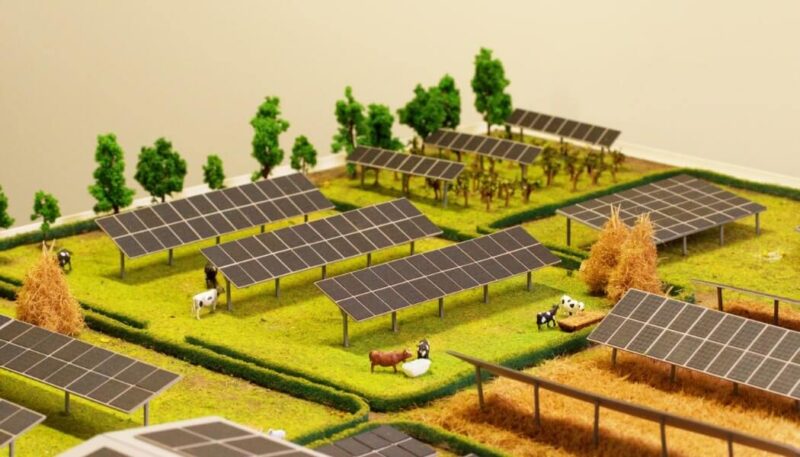
An agrivoltaic farm consists of solar panels installed above or around crops, allowing both solar energy harvesting and agricultural activities to coexist. These systems can be designed in various ways, including elevated solar panels, vertical solar arrays, or movable tracking panels that adjust to optimize sunlight distribution.
Key Benefits of Agrivoltaic Farms:
- Optimized Land Use: Allows simultaneous agricultural activities and energy production on the same land area.
- Enhanced Crop Yield: Some crops benefit from the partial shade provided by solar panels, reducing excessive heat stress and water evaporation.
- Energy Generation: Provides renewable energy that can be used on-site or fed into the power grid.
- Water Conservation: Reduces soil moisture evaporation, leading to better water retention in agricultural fields.
- Climate Resilience: Helps farmers adapt to changing climate conditions by mitigating extreme temperatures.
Agrivoltaic Farm Scale Model
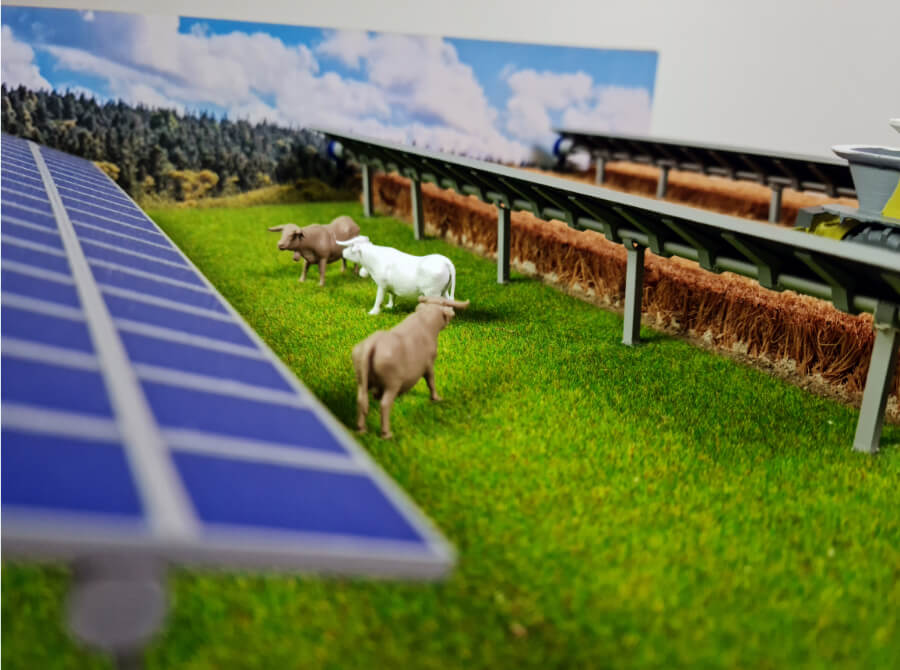
A scale model of an agrivoltaic farm is a small-scale, physical or digital representation of an operational agrivoltaic system. These models are useful for research, design optimization, and educational purposes. They help visualize and test various configurations before full-scale implementation.
Components of an Agrivoltaic Farm Scale Model:
- Miniature solar panels: Simulate the photovoltaic (PV) system used in real farms.
- Crops or artificial plants: Represent actual crops grown under the panels.
- Adjustable panel structure: Allows testing of different panel heights and angles.
- Sensors and monitoring equipment: Measure light exposure, temperature, and soil moisture.
- Energy storage and distribution system: Demonstrates how harvested energy is stored and utilized.

Applications of Scale Models:
- Research & development: Helps study the impact of solar panel placement on different crop types.
- Education & training: Assists students and farmers in understanding agrivoltaic concepts.
- Optimization & planning: Tests various designs to determine the most efficient setup before large-scale investment.
- Community awareness: Demonstrates the feasibility of agrivoltaic farming to stakeholders and policymakers.
Challenges and Future Prospects
While agrivoltaic farms offer numerous benefits, there are challenges to consider, such as high initial investment costs, potential shading effects on crop yield, and the need for specialized knowledge in both agriculture and solar energy. However, ongoing research and advancements in technology continue to improve the feasibility and efficiency of these systems.
The future of agrivoltaics is promising, with increasing interest in sustainable farming and clean energy solutions. By developing comprehensive scale models and conducting pilot projects, agrivoltaic farms can be optimized for different climates and crop types, paving the way for widespread adoption.

Agrivoltaic farms represent a sustainable approach to land use by integrating solar power generation with agricultural productivity. Scale models play a critical role in refining these systems, offering insights into efficient design and performance optimization.
As technology advances, agrivoltaics has the potential to revolutionize both the renewable energy and agricultural industries, contributing to a more sustainable future.