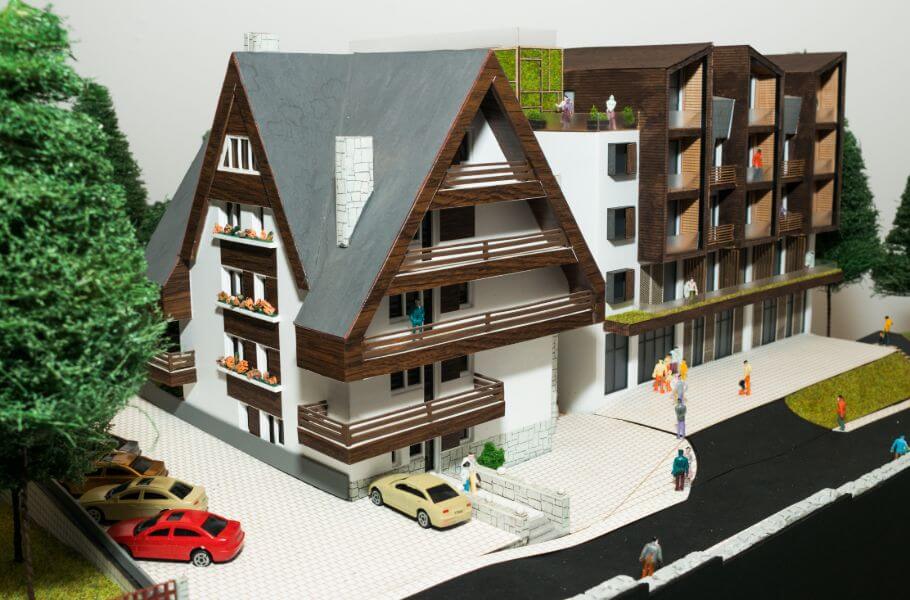
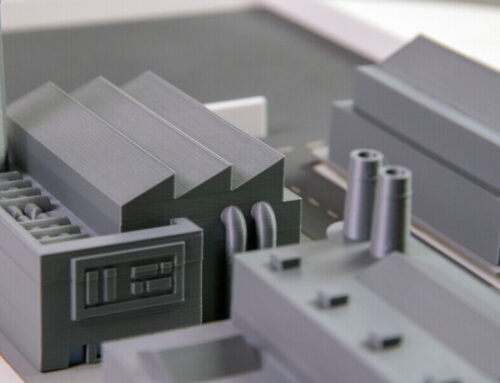
In the ever-evolving field of architecture, tools for visualization and communication have become increasingly sophisticated. Among these, physical architectural models and digital renders stand out as essential methods for presenting design concepts.
While both serve the purpose of bringing architectural ideas to life, they differ significantly in their applications, advantages, and limitations.
The tangible appeal of Architectural Models
Architectural models are physical representations of a building or space, typically created at a reduced scale. These models can range from simple, conceptual mock-ups to highly detailed and realistic replicas.

Advantages of Architectural Models
- Tactile experience – Physical models allow stakeholders to interact with the design in a way that digital visuals cannot. The ability to touch and move around a model provides a unique sense of scale and spatial relationships.
- Clear spatial representation – Unlike 2D drawings or screens, physical models offer an immediate and intuitive understanding of a design’s spatial configuration. This is particularly useful in communicating with clients or collaborators who may not be familiar with reading technical drawings.
- Material exploration – Architectural models can incorporate real-world materials, textures, and finishes, giving a more accurate representation of the final building. This can help clients visualize how the materials will work together in the actual structure.
- Timelessness – Physical models have a timeless, artistic quality that makes them valuable for presentations, exhibitions, and archival purposes. They can also serve as decorative pieces in an architect’s office or a client’s space.
The Digital Revolution: Architectural Renders
Digital renders are computer-generated images or animations that depict an architectural design in a virtual environment. They have become increasingly popular due to advancements in rendering software and hardware.
Advantages of Digital Renders
- High realism – Modern rendering software can produce photorealistic images with accurate lighting, shadows, and textures, giving viewers a vivid sense of what the finished project will look like.
- Flexibility and speed – Digital renders are highly adaptable. Architects can quickly make changes to the design, adjust lighting conditions, or test different materials without starting from scratch.
- Dynamic visualizations – Unlike static physical models, digital renders can include animations, walkthroughs, and even virtual reality (VR) experiences. These tools allow clients to “walk through” a space before it’s built.
- Cost-effective for iterations – While creating initial renders may require expensive software and skilled labor, the cost of making revisions is much lower compared to physical models.
- Global accessibility – Digital renders can be shared instantly with clients and collaborators anywhere in the world, making them ideal for remote presentations.
Challenges of Digital Renders
- Less tangible: Despite their visual impact, digital renders lack the physical presence of models, which can make spatial understanding more abstract.
- Over-reliance on software: The quality of a render depends heavily on the skill of the designer and the capabilities of the software. Poorly executed renders can misrepresent the design.
- Potential for unrealistic expectations: Photorealistic renders can sometimes lead to unrealistic expectations, as they may depict idealized versions of a project that are not achievable in reality.