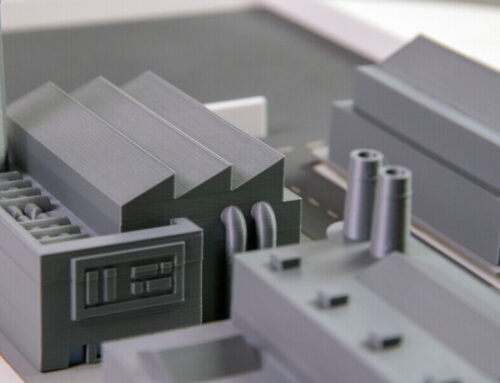
Renewable Energy Communities are groups of individuals, businesses, or institutions that collaborate to produce, distribute, and consume renewable energy within a localized area. These communities aim to:
- Enhance energy independence
- Reduce carbon footprints
- Promote social and economic benefits through shared energy resources
- Encourage local investment in clean energy projects
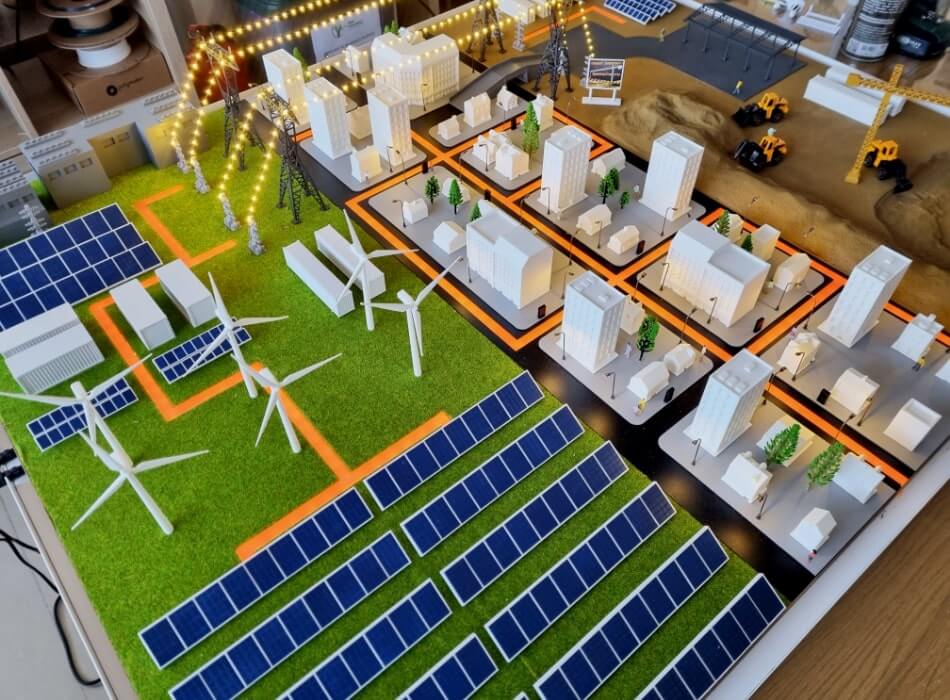
The role of architectural models in RECs
Architectural models play a significant role in ensuring the success of RECs by aiding in design, efficiency analysis, and scalability. Below are key ways in which architectural models contribute to these projects:
Urban and spatial planning
Architectural models help visualize the integration of renewable energy infrastructure within an urban or rural landscape. This includes:
- Site selection for solar panels, wind turbines, or bioenergy plants
- Building orientation to maximize solar gain and energy efficiency
- Infrastructure layout to ensure smooth energy distribution and minimal losses
Energy flow and optimization models
Advanced modeling techniques allow for precise energy flow simulations, enabling communities to optimize their energy usage. Computational models help:
- Simulate energy demand and supply patterns
- Integrate storage solutions like batteries
- Ensure grid stability by balancing production and consumption
Sustainable architecture and building design
RECs often incorporate sustainable architectural designs that prioritize energy efficiency. Architectural models assist in:
- Passive solar design to reduce heating and cooling loads
- Green building materials selection to minimize environmental impact
- Smart energy management systems for real-time consumption monitoring
Community engagement and stakeholder collaboration
Architectural models provide a tangible representation of how an REC will function, making it easier to communicate ideas with stakeholders. This improves:
- Community involvement by allowing residents to visualize their energy future
- Regulatory approvals by presenting clear and comprehensive plans
- Investor confidence by showcasing the feasibility of the project
Scalability and Future Expansion
One of the key advantages of architectural models is that they allow planners to anticipate future expansion. By creating flexible models, RECs can:
- Adapt to growing energy demands
- Integrate new technologies as they emerge
- Expand to include more participants within the community
Renewable Energy Communities represent a transformative approach to sustainable energy production and consumption. Architectural models play an essential role in their development by enabling effective planning, energy optimization, and stakeholder collaboration.

By leveraging modern design tools and computational modeling, RECs can create resilient, efficient, and scalable energy solutions for a greener future.