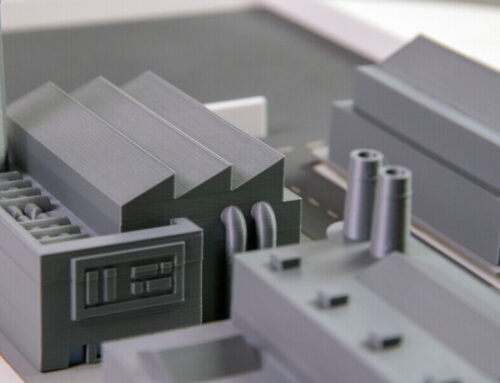
The Evolution of Urban Planning Scale Models
Scale models have been a part of urban planning for centuries. The earliest known urban scale model dates back to the 16th century when Leonardo da Vinci crafted a wooden model of Imola, Italy. These early models were rudimentary, often constructed from simple materials like wood and clay. However, they laid the foundation for the more sophisticated models we use today.
As urban planning and architectural techniques evolved, so did the scale models. Today, modern urban planning scale models are intricate and accurate representations of proposed developments.
They are constructed using cutting-edge technology, including 3D printing and computer-aided design (CAD) software. These advances have made scale models an indispensable tool for urban planners worldwide.

- The Importance of Urban Planning Scale Models
Visualization and Communication: Urban planning scale models provide a tangible representation of proposed developments, allowing planners to communicate their ideas effectively to various stakeholders, including government officials, investors, and the general public.
These models make it easier for non-experts to understand complex urban designs, fostering transparency and public engagement in the planning process.
Decision-Making: Urban planners use scale models to test different design scenarios and assess their impact on the urban environment. These models enable planners to make data-driven decisions about factors like traffic flow, green spaces, and building aesthetics.
By simulating the potential outcomes of various choices, scale models help identify the most suitable solutions for urban challenges.
Design Validation: Before investing substantial resources in construction, developers and investors can use scale models to validate their design concepts. These models allow them to explore the spatial arrangement, aesthetics, and functionality of a development before breaking ground, minimizing costly design revisions and construction delays.
Public Engagement: Scale models can engage the public in the urban planning process by making it easier for people to visualize and provide feedback on proposed developments. Public input is crucial in ensuring that urban spaces meet the needs and desires of the community they serve.
Historic Preservation: In addition to planning new developments, scale models are also invaluable for the restoration and preservation of historic urban areas. They help ensure that renovations and additions are in harmony with the existing architecture, preserving the cultural and historical identity of a city.
Urban planning scale models are not merely miniature replicas; they are powerful tools that help shape the cities of tomorrow. They aid in decision-making, foster public engagement, and ensure the efficient use of resources.
As technology continues to advance, scale models will evolve alongside it, becoming even more crucial in the pursuit of sustainable, functional, and beautiful urban spaces. The integration of modern tools and techniques in urban planning ensures that the cities we build are not only reflections of our needs but also our aspirations for a better future.