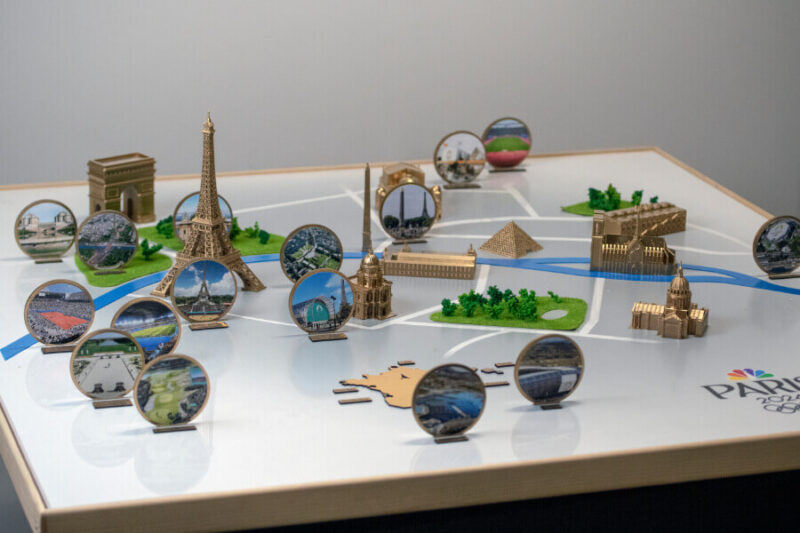
Paris, often referred to as the “City of Light,” is a global epicenter of art, history, and culture. It is home to some of the world’s most iconic landmarks, each reflecting the rich history and vibrant spirit of the French capital. From towering monuments to stunning museums, these landmarks attract millions of visitors every year and hold an indelible place in the hearts of both locals and travelers.
Eiffel Tower (La Tour Eiffel)
No discussion of Parisian landmarks would be complete without mentioning the Eiffel Tower, perhaps the most recognized structure in the world. Designed by engineer Gustave Eiffel and completed in 1889 for the World’s Fair, the tower was initially criticized by many Parisians for its bold, industrial design. However, it soon became a beloved symbol of modernity and innovation.
- Height: The Eiffel Tower stands at 324 meters (1,063 feet) tall, making it the tallest structure in Paris.
- Visitors: It welcomes nearly 7 million visitors annually, offering breathtaking panoramic views of the city from its observation decks.
- Cultural Icon: Over time, the Eiffel Tower has come to represent the essence of Paris—romantic, elegant, and timeless.
The Louvre Museum (Musée du Louvre)
The Louvre Museum is the largest art museum in the world and one of the most important cultural institutions on the planet. Originally built as a fortress in the late 12th century, the Louvre was transformed into a royal palace before becoming a public museum during the French Revolution.
- Art Collection: The Louvre is home to around 38,000 works of art, including Leonardo da Vinci’s Mona Lisa, the Venus de Milo, and The Raft of the Medusa.
- Glass Pyramid: In 1989, architect I. M. Pei designed the famous glass pyramid entrance, a striking contrast to the classical architecture that symbolizes the museum’s fusion of tradition and modernity.
- Global Significance: With over 10 million visitors annually, the Louvre stands as a testament to Paris’s enduring cultural influence.
Notre-Dame Cathedral
The Notre-Dame Cathedral is a masterpiece of French Gothic architecture, renowned for its intricate design, soaring spires, and majestic presence on the Île de la Cité, a small island in the Seine River. Construction of the cathedral began in 1163 and took over a century to complete.
- Architectural Features: Its iconic twin towers, massive stained-glass windows (especially the Rose Windows), and detailed sculptures, such as the gargoyles and chimera, make it one of the finest examples of Gothic architecture.
- Historic Significance: Notre-Dame has been the site of many significant events, including the coronation of Napoleon Bonaparte and the beatification of Joan of Arc.
- Restoration Efforts: Following the devastating fire in April 2019, restoration work is underway to return Notre-Dame to its former glory, with completion projected in the coming years.

Arc de Triomphe
Commissioned by Napoleon Bonaparte after his victory at the Battle of Austerlitz in 1805, the Arc de Triomphe stands at the western end of the Champs-Élysées and honors the soldiers who fought and died for France during the French Revolutionary and Napoleonic Wars.
- Design: The triumphal arch, completed in 1836, features detailed reliefs and inscriptions of battle victories and the names of generals. At its base lies the Tomb of the Unknown Soldier, where an eternal flame burns in remembrance of those lost in World War I.
- Views: Visitors can climb to the top of the Arc de Triomphe for sweeping views of Paris, including the Champs-Élysées, one of the most famous avenues in the world.

Musée d’Orsay
Housed in a former railway station, the Musée d’Orsay is one of Paris’s premier art museums, specializing in French art from the 19th and early 20th centuries. The museum is known for its extensive collection of Impressionist and Post-Impressionist masterpieces.
- Art Collection: Works by Monet, Van Gogh, Degas, Renoir, and Cézanne fill the museum’s galleries, making it a must-visit for art lovers.
- Architectural History: The Beaux-Arts train station that houses the museum was completed in 1900 and was converted into an art museum in 1986, blending industrial design with artistic elegance.
Paris is a city where history and modernity blend seamlessly, and its famous landmarks stand as testaments to its rich cultural legacy. From the awe-inspiring Eiffel Tower to the historic splendor of Notre-Dame, these iconic sites draw visitors from around the globe to experience the beauty, history, and artistry of the French capital. Each landmark tells its own unique story, contributing to the tapestry of Paris as a city of endless fascination and inspiration.

3D printed architectural models are also valuable tools for educational purposes. They can be used in schools and universities to teach architectural concepts, showcase historical buildings, or visualize urban planning projects. While 3D printing architectural models can be more cost-effective compared to traditional handmade models, the cost varies depending on factors such as size, complexity, and material.