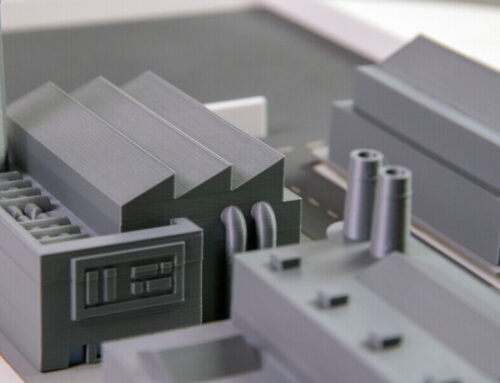
This partnership bridges the gap between conceptual design and tangible, three-dimensional representations, offering a host of advantages that elevate the quality, understanding, and success of architectural projects.
- Enhanced Visualization
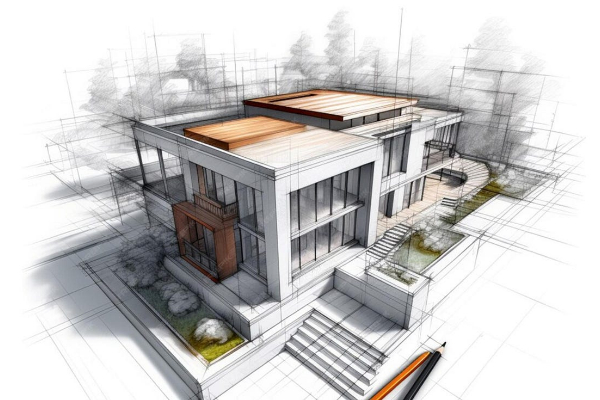
One of the most significant benefits of collaboration between architects and model makers is the enhanced visualization of architectural designs. Architects often work with abstract concepts and 2D drawings, which can be challenging for clients, stakeholders, or even the design team to fully grasp.
Model makers bring these concepts to life, transforming blueprints and digital renderings into physical models. These models provide a tangible, three-dimensional representation of the project, allowing everyone involved to see, touch, and better understand the architect’s vision.
- Improved Communication
Architectural projects involve numerous stakeholders, including clients, engineers, contractors, and regulatory bodies. Effective communication among these parties is crucial to ensure the project aligns with its goals and complies with regulations.
Collaboration between architects and model makers facilitates clearer communication. Physical models serve as a universal language, breaking down complex designs into understandable forms. This clarity helps prevent misunderstandings, reduces the risk of errors, and ensures that all parties are on the same page throughout the project.
- Design Refinement and Problem-Solving
The iterative process of refining architectural designs benefits immensely from collaboration with model makers. Physical models allow architects to explore different design options and identify potential issues early in the process.
By creating scaled models, architects can test various aspects of the design, such as spatial relationships, proportions, and material choices. This hands-on approach helps in identifying and resolving design challenges before they become costly problems during construction. It also encourages innovative solutions, as architects can experiment with ideas that might be difficult to visualize on paper or a computer screen.

- Client Engagement and Satisfaction
Clients are often more comfortable making decisions when they can see a physical representation of their future space. While digital models and renderings have advanced significantly, nothing quite compares to the impact of a physical model.
Clients can interact with these models, gaining a deeper understanding of the project. This interaction not only enhances their confidence in the design but also fosters a stronger connection to the project. By involving model makers in the design process, architects can provide clients with a more engaging and satisfying experience, leading to greater client satisfaction and a higher likelihood of project approval.
- Accurate Project Representation
Physical models created by skilled model makers offer a level of accuracy and detail that is difficult to achieve with digital models alone. These models can depict intricate architectural features, textures, and materials with a precision that helps convey the true essence of the design.
This accuracy is particularly valuable in presentations, where the goal is to convey the design’s quality and feasibility. Detailed models can also be used to demonstrate compliance with regulations or to showcase how the project will fit within its environment, both of which are crucial for gaining approval from authorities and communities.
- Facilitating Collaboration Among Teams
In complex architectural projects, collaboration is key to success. Architects, engineers, interior designers, and other professionals must work together to create a cohesive final product. Model makers contribute to this collaborative environment by providing a common focal point—the physical model.

This model serves as a reference for all team members, fostering collaboration and ensuring that everyone is aligned with the project’s goals. By involving model makers early in the process, architects can create an integrated design approach that incorporates input from all relevant disciplines, resulting in a more cohesive and well-rounded final product.
- Supporting Sustainable Design
Sustainability is an increasingly important consideration in architecture. Model makers can play a crucial role in supporting sustainable design by helping architects explore and visualize environmentally friendly solutions.
Through the use of materials, energy-efficient design principles, and innovative construction techniques, model makers can demonstrate how a project can minimize its environmental impact. This collaboration can lead to the development of more sustainable buildings that are both functional and aesthetically pleasing.
- Cost and Time Efficiency
While it may seem counterintuitive, involving model makers can actually save time and reduce costs in the long run. By identifying potential issues early in the design process through physical models, architects can avoid costly mistakes during construction.
Additionally, physical models can expedite decision-making by providing a clear and compelling representation of the project, reducing the time spent on revisions and approvals. This efficiency can be particularly valuable in large-scale projects, where delays and cost overruns can have significant financial implications.
The collaboration between architects and model makers is a powerful partnership that enhances the entire architectural process. From improved visualization and communication to design refinement and client satisfaction, the benefits are manifold.
By working together, architects and model makers can create more accurate, innovative, and successful architectural projects that meet the needs of clients, stakeholders, and the environment. As the architectural industry continues to evolve, this collaboration will remain a cornerstone of successful design and construction.