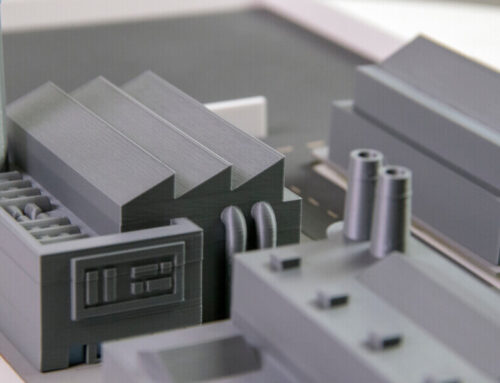
3D printed architectural models are physical representations of buildings or structures that are created using additive manufacturing techniques, commonly known as 3D printing.
These models provide a tangible and realistic visualization of architectural designs, allowing architects, designers, and clients to better understand the spatial relationships, proportions, and aesthetics of a building before it is constructed.
Here are some key points about 3D printed architectural models:
- Design Process
Architects and designers create 3D models of their designs using computer-aided design (CAD) software. These digital models are then prepared for 3D printing by converting them into a format that can be understood by 3D printers.
- Materials
3D printed architectural models can be made from various materials, including plastics, resins, and even metals. The choice of material depends on factors such as the desired level of detail, color, durability, and cost.
- Accuracy and Detail
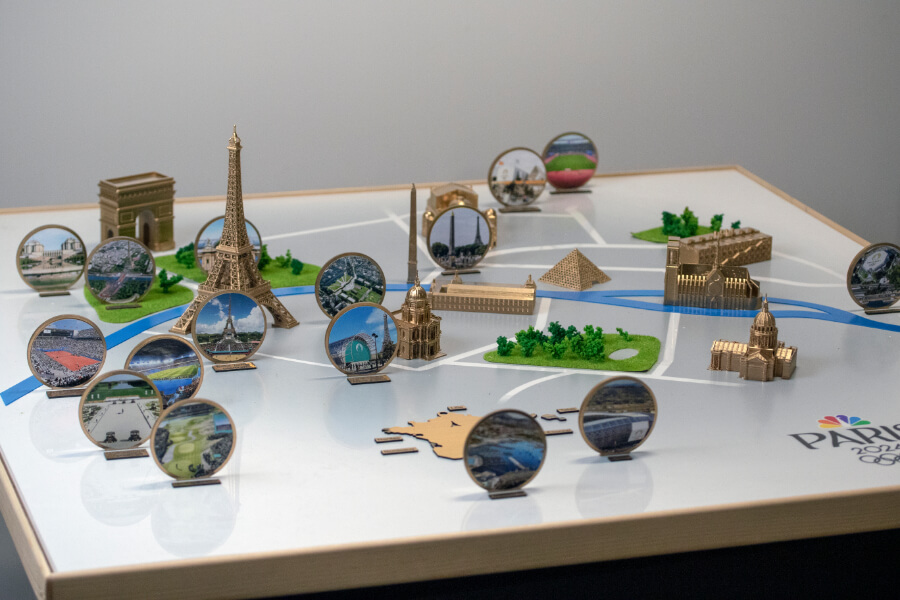
3D printing allows for highly accurate and detailed models. Fine details such as windows, textures, and landscaping can be faithfully reproduced, providing a realistic representation of the proposed design.
- Visualization and Communication
3D printed models enable architects and designers to communicate their ideas effectively to clients, stakeholders, and construction teams. They provide a physical representation that can be easily understood and evaluated from various angles.
- Iterative Design
3D printing facilitates the iterative design process. Architects can create multiple iterations of a design, quickly making modifications and improvements based on feedback and analysis. This iterative approach helps refine the design and identify potential issues before construction begins.

- Cost and Time Efficiency
While 3D printing architectural models can be more cost-effective compared to traditional handmade models, the cost varies depending on factors such as size, complexity, and material. Additionally, 3D printing can significantly reduce the time required to create models, allowing for quicker design iterations and decision-making.
- Educational Purposes
3D printed architectural models are also valuable tools for educational purposes. They can be used in schools and universities to teach architectural concepts, showcase historical buildings, or visualize urban planning projects.
Overall, 3D printed architectural models offer a powerful visualization tool that enhances the design and communication process in architecture, allowing for better understanding, collaboration, and decision-making among all stakeholders involved.