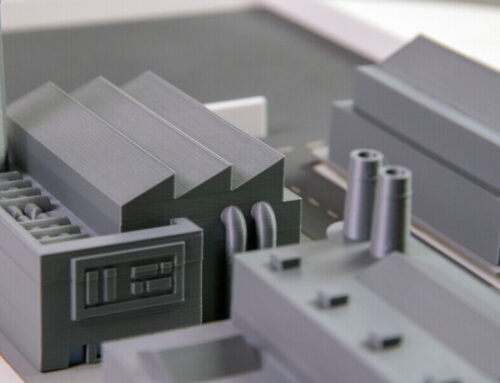
Traditionally, architects relied on handmade scale models to communicate their concepts to clients, stakeholders, and even themselves. However, with the advent of 3D printing technology, the landscape of architectural modeling has undergone a significant transformation.
3D printing has emerged as a powerful tool, offering architects unparalleled precision, flexibility, and efficiency in bringing their designs to life. In this article, we delve into the world of 3D printing for architecture models and explore its impact on the design process.

Precision and accuracy:
One of the most significant advantages of 3D printing in architectural modeling is its ability to achieve precision and accuracy with intricate details. Traditional model-making techniques often faced limitations in replicating complex designs faithfully.
However, with 3D printing, architects can produce highly detailed and accurate models that precisely reflect their vision. Whether it’s replicating intricate facades, intricate interior spaces, or elaborate structural elements, 3D printing allows architects to create models with unparalleled precision, enabling them to evaluate and refine their designs with confidence.
Iterative design process:
The iterative nature of architectural design often necessitates multiple iterations and revisions to achieve the desired outcome. In traditional model-making methods, each iteration can be time-consuming and costly. However, 3D printing streamlines this process by allowing architects to quickly produce and modify prototypes at a fraction of the time and cost.
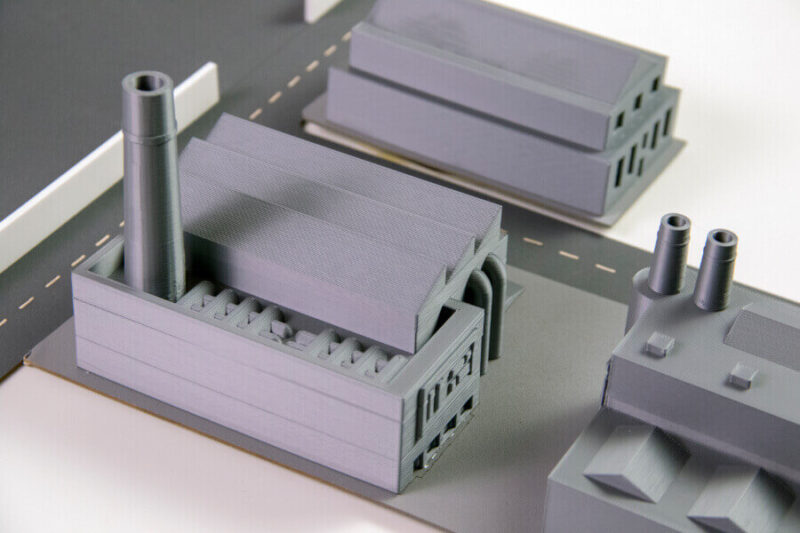
With 3D printing, architects can easily experiment with different design iterations, test variations, and incorporate feedback from clients and stakeholders in real-time. This iterative approach not only accelerates the design process but also fosters creativity and innovation, enabling architects to explore new possibilities and push the boundaries of design.
Customization and personalization:
Architecture is inherently a bespoke endeavor, with each project presenting unique challenges and requirements. 3D printing offers architects the ability to customize and personalize models to suit specific project needs. Whether it’s adjusting the scale, materiality, or geometry of the model, 3D printing provides architects with unprecedented flexibility in tailoring their designs to meet the demands of each project.
Furthermore, 3D printing enables architects to incorporate intricate details, textures, and finishes that would be difficult or impossible to achieve using traditional methods. This level of customization not only enhances the visual appeal of the models but also enriches the design narrative, allowing architects to communicate their ideas more effectively.

Sustainability and material efficiency:
In an era increasingly focused on sustainability, 3D printing offers architects a more environmentally friendly alternative to traditional model-making techniques. Unlike traditional methods that often generate significant waste from cutting and shaping materials, 3D printing minimizes material wastage by only using the exact amount of material required for each model.
Additionally, 3D printing allows architects to utilize eco-friendly materials such as bioplastics and recycled polymers, further reducing the environmental impact of model production. By embracing 3D printing, architects can not only reduce their carbon footprint but also contribute to a more sustainable future for the industry.
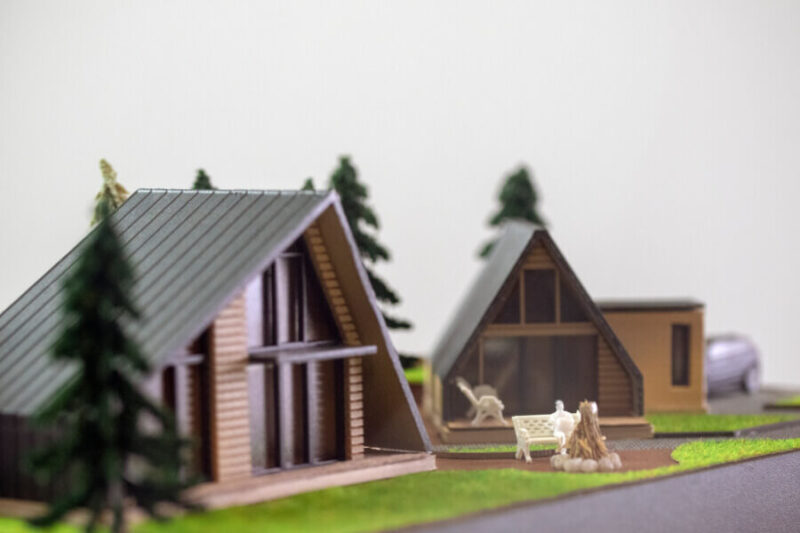
The integration of 3D printing technology into architectural practice has revolutionized the way architects conceptualize, visualize, and communicate their designs. From precision and accuracy to iterative design processes, customization, and sustainability, 3D printing offers architects a myriad of benefits that enhance the overall design workflow.

As 3D printing continues to evolve and become more accessible, its role in architectural modeling is poised to expand further, empowering architects to push the boundaries of creativity and innovation in the built environment.