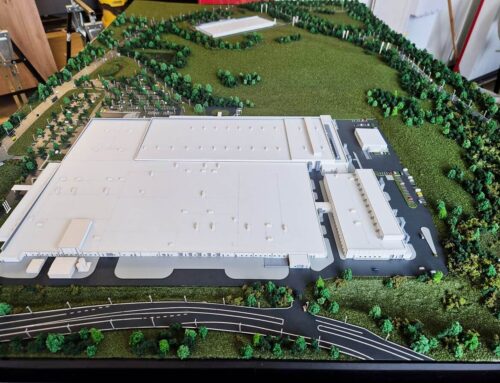
Project Description
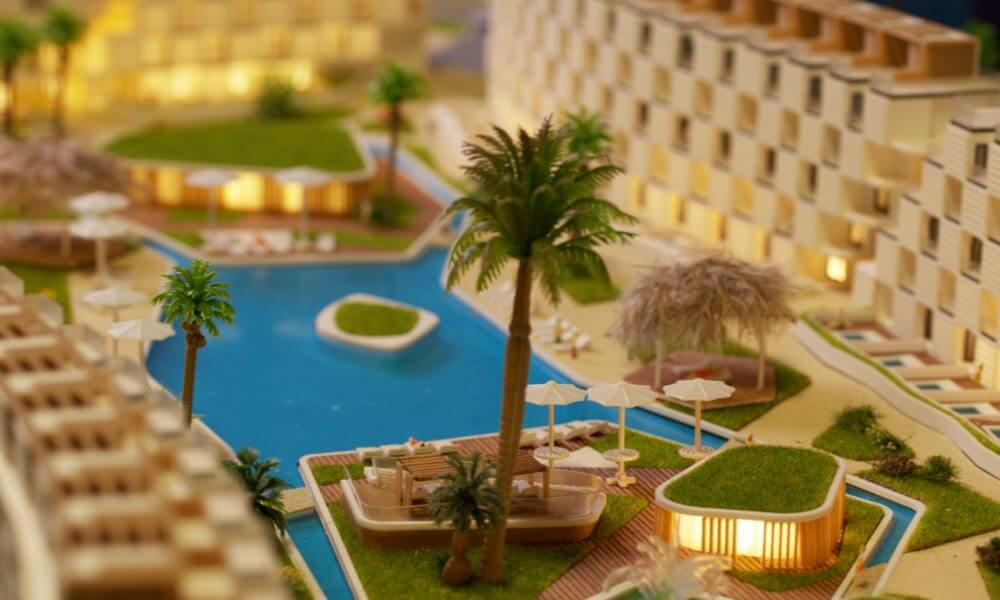
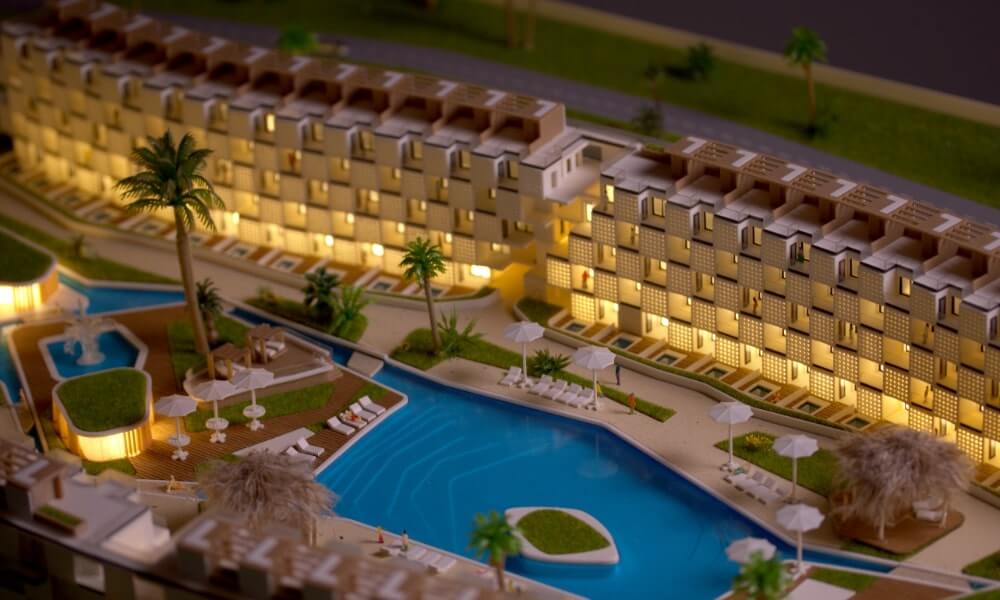
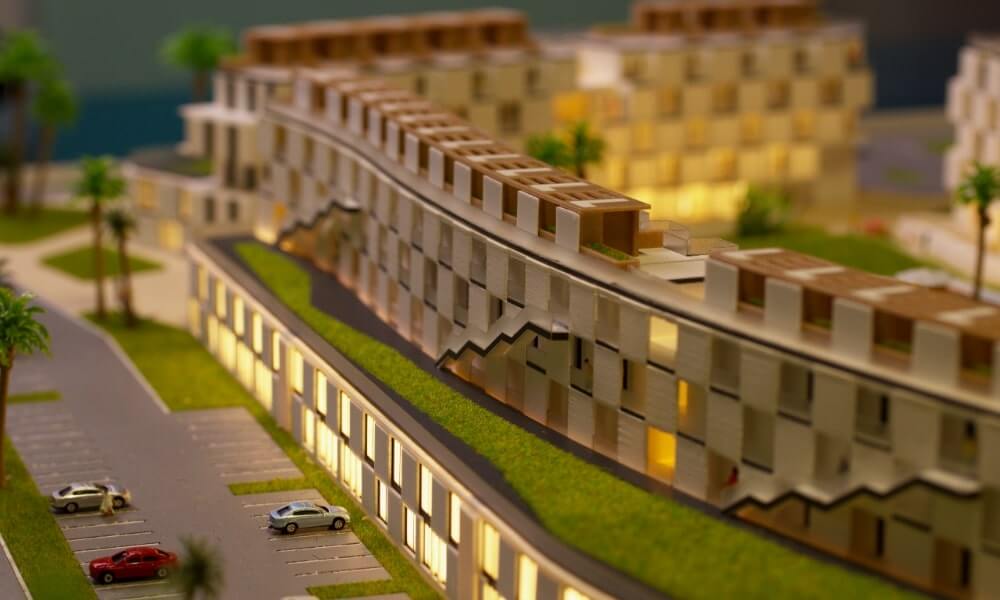
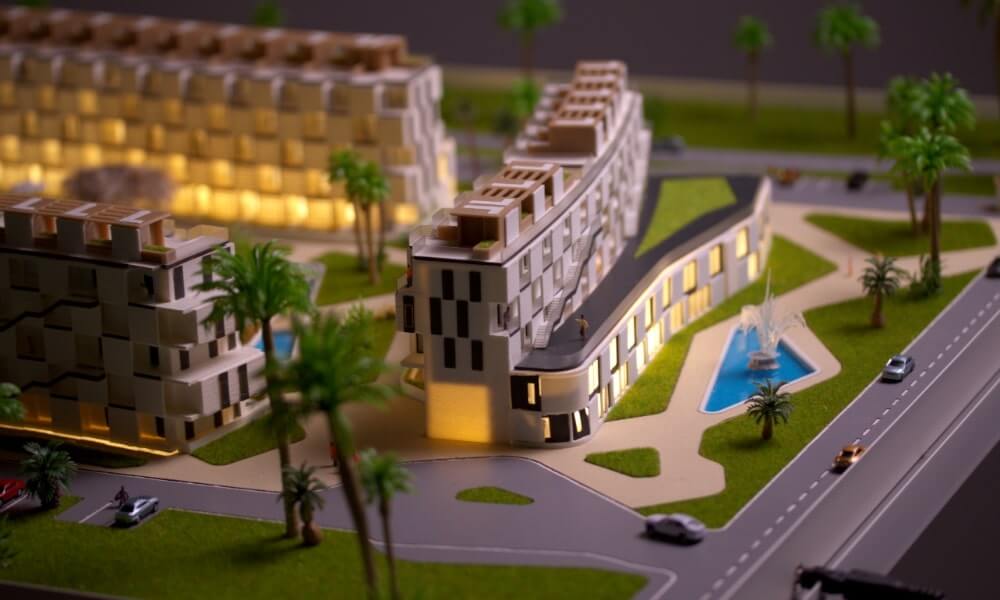


This is an architectural model of a large, modern resort complex. The design is characterized by multiple multi-story buildings with a distinctive checkered facade, giving them a unique texture and visual identity. The structures are arranged around a central courtyard, creating a communal and private space for guests.
The model is highly detailed and showcases a variety of amenities and features:
- Extensive pool area: The central part of the complex is dominated by a large, free-form swimming pool with a unique island in the middle. The area is surrounded by lounge chairs, palm trees, and what appear to be shaded seating areas, creating a relaxing, tropical atmosphere.
- Landscaped grounds: The entire complex is set within a meticulously landscaped environment. The grounds feature lush green spaces, miniature palm trees, and well-defined pathways.
- Sports and recreational facilities: In the upper left of the model, a sports court is visible, indicating that the resort offers more than just poolside relaxation.
- Urban integration: The model includes surrounding roads with miniature cars, streetlights, and parking areas, which helps to visualize how the resort would be integrated into a larger urban or suburban setting.
Overall, the model effectively communicates the scale, layout, and luxurious feel of a high-end tourist resort, highlighting its key architectural and recreational elements.
From luxury resorts to boutique establishments, architectural scale models serve as valuable tools throughout the design and construction process. These models allow everyone involved to envision the scale, proportions, and spatial relationships within the hotel structure, making it easier to discuss and refine design choices.
If you want to create architectural models for various projects and products of your business, please contact us. We have significant experience in making various architectural models.
Hotels are complex structures that require careful spatial planning to ensure optimal functionality and flow. Architectural scale models enable designers to assess the layout, circulation, and utilization of space within the hotel environment.
By physically moving through the model or studying it from different angles, architects can identify potential design flaws, such as inefficient room layouts or awkward corridors. This iterative process allows for adjustments to be made early on, leading to more efficient use of space and improved guest experiences.